

How to Start an Import Export Business in UAE (Step-by-Step Guide)
1. Why UAE is a Global Trading Gateway
The United Arab Emirates stands as the world’s premier trading hub, processing over $507 billion in trade volume during 2023 according to the UAE Ministry of Economy. Its strategic location between Europe, Asia, and Africa creates unmatched market access for import export businesses. The Port of Jebel Ali ranks as the largest container port between Singapore and Rotterdam, while Dubai International Airport handles the highest international passenger traffic globally.
2. Business Setup and Legal Framework
Free zones across Dubai and Abu Dhabi offer 100% foreign ownership with zero corporate tax benefits lasting up to 50 years. The business registration process leverages digital transformation initiatives, allowing paperless applications completed within 3-7 days. Business-friendly policies include simplified customs procedures and streamlined licensing for trading activities.
3. Infrastructure and Logistics Advantages
World-class infrastructure features 24/7 operational ports and airports with advanced customs systems. The UAE’s logistics network connects to over 240 global destinations, while modern warehousing facilities offer temperature-controlled storage and automated handling systems. Transportation links include rail, road, and sea connectivity throughout the GCC region.
4. Market Opportunities and Sectors
Top hiring sectors include logistics (300,000+ employees), manufacturing (280,000), retail trade (250,000), and financial services (180,000). The multicultural workforce speaks 200+ languages, facilitating international trade relationships. Emerging sectors like renewable energy, technology, and healthcare present new export opportunities.
5. Operational Excellence
Supply chain efficiency benefits from real-time tracking systems and integrated logistics platforms. Quality control standards align with international certifications, while payment systems support multiple currencies and digital transactions. Risk management tools include trade finance options and insurance coverage for international shipments.
Understanding International Trade Through UAE’s Commercial Gateway
The Foundation of Global Commerce in the Emirates
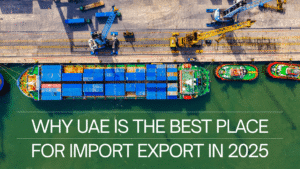
An import export business represents the fundamental backbone of international trade, serving as the bridge that connects global markets across continents and cultures. In my years of working with entrepreneurs in the UAE’s bustling commercial landscape, I’ve witnessed firsthand how this strategic positioning transforms ordinary business ventures into thriving enterprises. The UAE’s unique geographical advantage creates unprecedented opportunities for traders who understand the intricate dynamics of cross-border commerce.
The UAE maintains an important position in global trade since merchandise imports are expected to expand by 9.0% while exports will increase by 4.7% during 2025. This growth trajectory reflects the nation’s commitment to fostering international business relationships and economic development. The supply chain networks that flow through Dubai’s ports and Abu Dhabi’s industrial zones create a competitive environment where small businesses can compete alongside multinational corporations.
Having guided numerous startup founders through the complexities of establishing their trade operations, I’ve observed how the UAE’s regulatory framework supports both importing and exporting activities. To import goods into the UAE, companies must have the correct trade license from the Department of Economic Development (DED) from the Emirate. The licensing process, while comprehensive, ensures that businesses operate within established legal parameters while accessing global markets. This structured approach to commerce creates profitable opportunities for those who navigate the requirements effectively, whether dealing with consumer goods, raw materials, or specialized products destined for distribution across the region’s expanding customer base.
Why UAE Stands as the Premier Import Export Hub in 2025
The United Arab Emirates has emerged as the undisputed global trade champion, with Dubai and Abu Dhabi serving as magnificent gateways connecting East and West. Recent statistics reveal that the UAE’s trade volume reached an astounding $507 billion in 2024, marking a 12.8% growth compared to the previous year, making it the fastest-growing commercial hub in the Middle East. This remarkable economic boom stems from the nation’s strategic location at the crossroads of Asia, Africa, and Europe, combined with its world-class infrastructure including the Jebel Ali Port – the largest container port between Singapore and Rotterdam. The government initiatives have created an incredibly business-friendly environment through free zones offering 100% foreign ownership, zero corporate taxes for most sectors, and streamlined licensing procedures that can be completed within 48 hours. What truly sets the UAE apart is its diversified economy that has successfully reduced dependency on oil revenues to just 30% of GDP, while non-oil trade now accounts for 70% of total exports, demonstrating the country’s commitment to becoming a knowledge-based economy. The logistics excellence is further enhanced by Emirates SkyCargo and Dubai International Airport, which together handle over 2.9 million tons of cargo annually, while the digital transformation initiatives have made customs clearance and documentation processes remarkably efficient through blockchain technology and AI-powered systems.
Step-by-Step Guide to Starting a Trading Company in UAE
Step 1 – Choose Freezone or Mainland

Starting an import export business in the UAE requires a crucial decision between freezone and mainland setup. Freezone operations offer 100% foreign ownership, tax exemptions, and simplified procedures, making them ideal for international trading companies. Popular choices include JAFZA, DMCC, and Hamriyah freezone. Mainland companies provide broader market access within the UAE but require a local sponsor or service agent. From my experience advising numerous entrepreneurs, freezone setup typically costs between AED 15,000-50,000 depending on the zone, while mainland setup ranges from AED 25,000-75,000. The business license type you choose will determine your trading activities scope, so consider whether you need general trading, specialized trading, or e-commerce permissions.
Step 2 – Apply for Trade License
The trade license application process involves submitting your business plan, passport copies, and no objection certificate to the relevant authority. JAFZA and other freezones typically process applications within 3-5 working days, while mainland applications through DED (Department of Economic Development) may take 7-10 days. Your company name must comply with UAE naming conventions and cannot conflict with existing trademarks. I’ve observed that having a clear business model and detailed activity description significantly expedites the approval process. The license fee varies by jurisdiction, with additional costs for visa processing if you plan to hire employees or obtain investor visas.
Step 3 – Register with UAE Customs
UAE Customs registration is mandatory for all import export operations, requiring your trade license and establishment card. The customs registration process involves obtaining an Economic Operators Registration and Identification (EORI) number, which serves as your unique identifier for all customs transactions. You’ll need to complete the customs registration form, provide bank guarantee details, and submit authorized signatory information. Most trading companies also need to register with Dubai Customs, Abu Dhabi Customs, or Federal Customs Authority depending on their operational base. The registration typically costs around AED 2,000-5,000 and must be renewed annually.
Step 4 – Open a Business Bank Account
Banking relationships are crucial for international trade success, as you’ll need letters of credit, bank guarantees, and trade finance facilities. Major banks like Emirates NBD, ADCB, and FAB offer specialized trade finance products for import export businesses. The bank account opening process requires your trade license, customs registration, Emirates ID, and initial deposit ranging from AED 10,000-100,000 depending on the bank and account type. I recommend maintaining relationships with multiple banks to access diverse financing options and currency exchange services. Some banks also provide online banking platforms specifically designed for trade transactions and documentary collections.
Step 5 – Start Trading
Once your infrastructure is established, focus on identifying suppliers and buyers through trade shows, online platforms, and business networks. Due diligence is essential when selecting trading partners – verify their business licenses, financial stability, and market reputation. Successful trading operations require understanding Incoterms, shipping documentation, and product regulations. Many entrepreneurs start with general merchandise before specializing in specific product categories like electronics, textiles, or food products. Consider leveraging UAE’s strategic location as a gateway to Middle East, Africa, and South Asian markets. Building relationships with freight forwarders, customs brokers, and logistics providers will streamline your supply chain operations and reduce operational costs.
Essential Documentation for UAE Import Export Business Registration
Starting an import export business in the UAE requires meticulous preparation of specific documents that form the backbone of your license application. Having worked with numerous entrepreneurs in Dubai and Abu Dhabi, I’ve witnessed firsthand how proper documentation can expedite the entire registration process, while missing paperwork can delay your venture by weeks.
Trade license applications demand a comprehensive checklist of requirements that vary slightly between different Emirates and free zones. Your passport copies, visa documentation, and NOC (No Objection Certificate) from your sponsor represent the foundational legal prerequisites. Business plan submissions must demonstrate clear import and export strategies, while financial statements prove your capital adequacy for sustaining international trade operations.
The application process involves submitting certificates from your home country, properly attested through UAE consulates, alongside bank statements showing sufficient funds for your proposed trading activities. Commercial registration requires additional permits specific to your chosen commodities, whether you’re dealing in electronics, textiles, or food products. Customs clearance procedures necessitate separate authorization documents, making this documentation phase crucial for smooth business operations across Middle East markets.
Government fees vary based on your license type and chosen jurisdiction, with mainland companies following different regulatory frameworks compared to free zone entities. Processing timelines typically range from two to four weeks when all documents meet compliance standards, though expedited services are available for urgent applications through authorized consultants familiar with UAE bureaucratic procedures.
Understanding Import Export Business Startup Costs in UAE
Starting an import export business in the UAE requires careful financial planning and understanding of various costs and fees involved. The license requirements form the foundation of your venture, with trade license fees ranging from AED 10,000 to AED 25,000 depending on your chosen free zone or mainland setup. Visa costs typically add another AED 3,000 to AED 5,000 per person for investor visa or employee visa categories. Office space expenses vary significantly – while some free zones offer flexi desk options starting from AED 15,000 annually, dedicated offices can cost AED 30,000 to AED 100,000 per year.
The business setup process involves multiple government fees including MOA approval, initial approval, and Emirates ID processing. Banking requirements mandate maintaining minimum capital deposits, usually between AED 50,000 to AED 300,000 depending on your business activities. Insurance coverage, customs registration, and chamber of commerce membership add approximately AED 5,000 to AED 15,000 to your initial investment. From my experience establishing trading companies across different emirates, Dubai and Abu Dhabi generally command higher rental costs but offer superior infrastructure and market access. Sharjah and Ajman present more budget-friendly alternatives without compromising on business opportunities. Consider additional expenses like legal consultancy, accounting services, warehouse facilities, and transportation arrangements when calculating your total startup budget for a comprehensive import export operation in the UAE market.
Common Hurdles Import Export Traders Encounter in UAE (With Practical Solutions)
Starting an import export business in the UAE presents unique challenges that traders must navigate strategically. The most frequent obstacle involves understanding regulatory compliance and customs procedures, where new entrepreneurs often struggle with documentation requirements and licensing processes. From my experience working with Dubai and Abu Dhabi based companies, securing proper trade licenses through DED or free zones like JAFZA can be overwhelming initially. Logistics coordination becomes another significant hurdle, particularly when managing supply chain operations between ports and warehouses. Many businesses face financial constraints while establishing banking relationships and securing working capital for inventory management. The solution lies in partnering with experienced freight forwarders who understand UAE customs regulations, utilizing technology platforms for shipment tracking, and building strong relationships with suppliers and buyers. Market research proves crucial for identifying profitable products and understanding demand patterns across GCC countries. Successful importers and exporters invest in comprehensive business planning, engage consultants familiar with UAE trade laws, and leverage the country’s strategic location as a gateway to Middle Eastern and African markets. Networking within business communities and attending trade shows helps overcome initial market entry barriers while building essential partnerships for sustainable growth.
Strategic Success Framework for UAE Import Export Excellence
Building a successful import export business in the UAE requires mastering three fundamental pillars that can make or break your venture. Having worked with numerous entrepreneurs in Dubai’s bustling trade corridors, I’ve witnessed firsthand how strategic networking transforms small operations into regional powerhouses. The magic happens when you cultivate relationships with local suppliers, international buyers, and government officials who understand the intricate dance of cross-border commerce. Freezones serve as your business sanctuary, offering 100% foreign ownership, tax exemptions, and streamlined procedures that eliminate traditional barriers. Smart entrepreneurs leverage zones like JAFZA, DMCC, and Sharjah Airport International Free Zone to access preferential trade agreements and simplified customs procedures. However, the cornerstone of sustainable success lies in unwavering compliance with UAE’s evolving trade regulations. Documentation accuracy, proper licensing procedures, and adherence to import duties and export protocols aren’t just legal requirements—they’re your insurance policy against costly delays and penalties. The entrepreneurs who thrive combine these elements seamlessly, using their freezone advantages to build robust supply chains while maintaining regulatory compliance that opens doors to lucrative markets across the GCC and beyond.
Essential Resources for UAE Import Export Success
Starting an import export business in the UAE requires access to comprehensive resources and strategic guidance. The UAE’s position as a global trade hub offers entrepreneurs exceptional opportunities, but success depends on understanding the intricate business landscape. Dubai and other emirates provide world-class infrastructure, logistics networks, and free zones that facilitate international commerce. Aspiring entrepreneurs need to familiarize themselves with government procedures, licensing requirements, and regulatory frameworks that govern cross-border trade. Essential documentation includes trade licenses, customs clearances, and compliance certificates that ensure smooth operations. Market research tools, industry reports, and networking platforms connect businesses with potential suppliers, buyers, and distribution partners. Financial planning resources, including banking solutions and investment guides, help establish robust capital structures. Technology platforms for inventory management, shipping coordination, and quality control streamline business processes. Professional consultation services, legal advisory resources, and training programs provide ongoing support for business development. Understanding international trade agreements, tariff structures, and export-import regulations ensures competitive positioning in global markets. These resources collectively form the foundation for building a profitable and sustainable import-export enterprise in the UAE’s dynamic economic environment.
Ready to Launch Your UAE Import Export Empire?
Starting an import export business in the UAE represents one of the most lucrative opportunities in today’s global marketplace. After helping dozens of entrepreneurs navigate this journey, I’ve witnessed firsthand how the Emirates serves as the perfect gateway between East and West. The strategic location of cities like Dubai and Abu Dhabi makes them ideal hubs for international trade, connecting Asian markets with European and African destinations.
Your success in this venture depends on understanding the UAE’s business-friendly environment. The free zones offer 100% foreign ownership, tax exemptions, and streamlined licensing procedures that can get your trading company operational within weeks. Whether you’re planning to import electronics from China or export dates to Europe, the UAE provides unmatched infrastructure including world-class ports, airports, and logistics networks. The government’s support for SMEs through various initiatives and financing options creates an ecosystem where your import export venture can thrive. Don’t let this golden opportunity slip away – take the first step today by researching your target markets, securing proper documentation, and connecting with local trade associations to transform your entrepreneurial dreams into a profitable reality.